

Age assurance

Trusted by startups & the world’s largest companies


Extensively evaluated by third parties
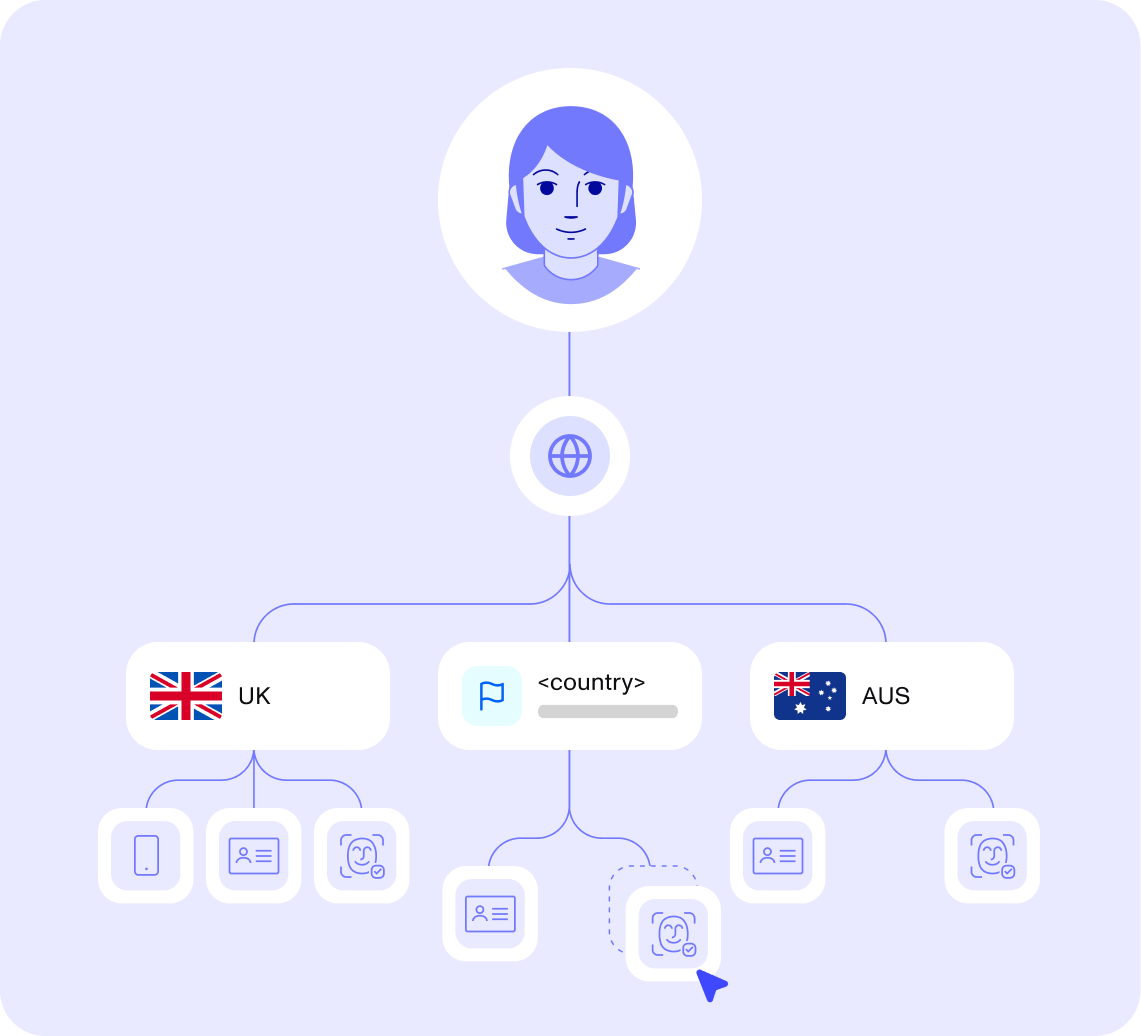
Adapt to new online safety regulations across geographies
Use highly-effective methods to build age assurance solutions that work across regions and industries.
Sample industries
Social media
Age-restricted retailers (e.g., for tobacco, alcohol)
Entertainment

Serve your entire user base
Make it easier for users to access your services by accepting a wider range of age evidence for any region’s regulatory threshold.
Sample age gates
13+
16+
18+
21+
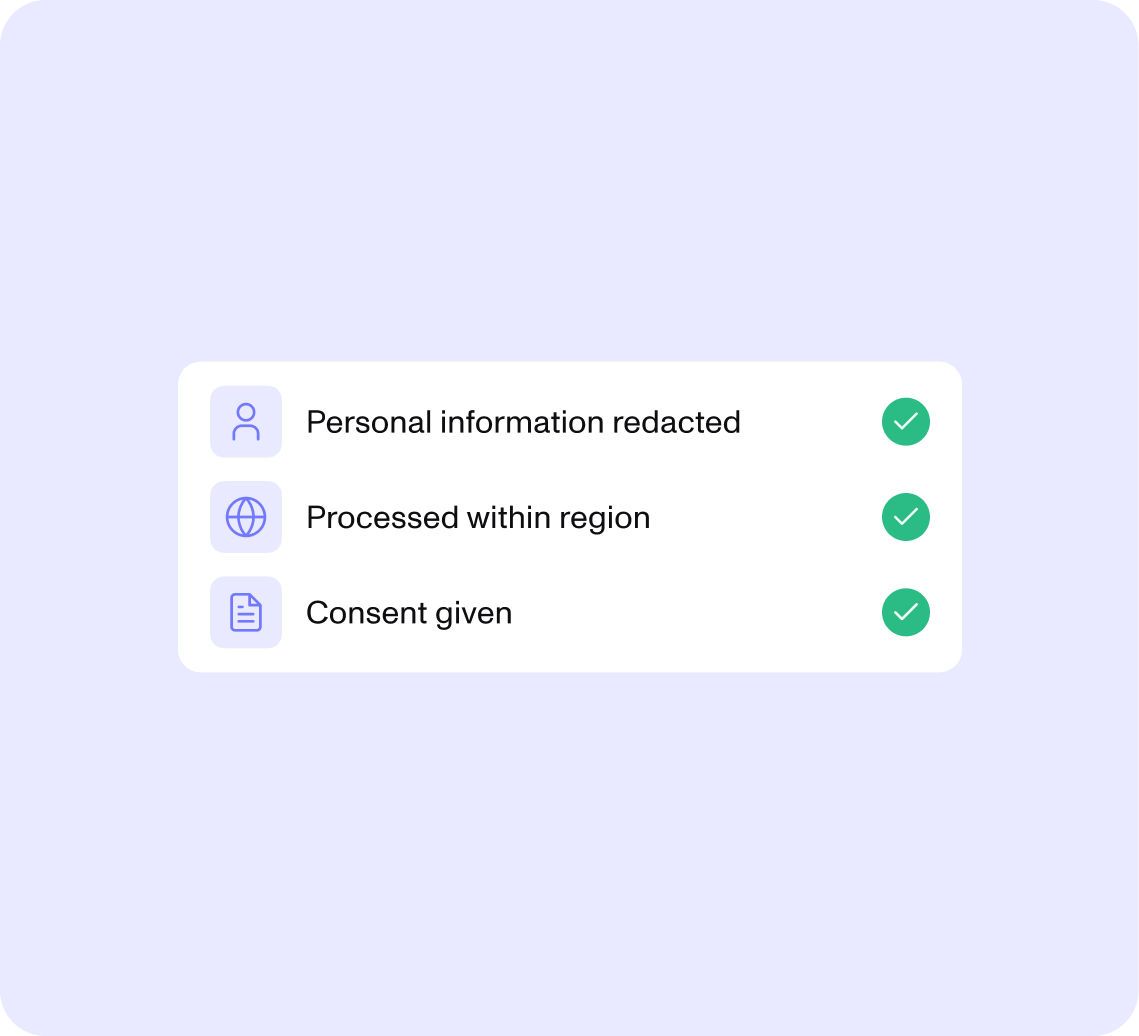
Reduce end user privacy risk
Protect user data with stringent security controls and automate PII redaction to support data minimization.
Persona follows international measures
ISO 27001
SOC 2 Type 2
ISO 27566-1
FedRAMP® Authorized status
Everything you need to support your age assurance approach

Our advanced AI models are trained on millions of ethically sourced data points and continuously evaluated to estimate age reliably while minimizing demographic bias.
Automatically extract birthdate from government documents, such as national IDs or driver’s licenses, from more than 200 countries and territories, then bind to a user with a selfie-to-portrait comparison.
Confirm that the information printed on a government-issued ID or presented by a user matches issuing and authoritative sources for more than 50 countries.
Confirm valid credit card ownership to verify users’ ages in countries where owners must be over the age of 18.
Use email heuristics, such as online presence, and cross-reference with official sources to assess users’ ages.
Use Australian identity providers (e.g. banks) to confirm evidence of age without revealing personal information.
Verify if a user’s age is over 18 in countries where birthdate records are kept for each phone line holder.
Reduce friction across the user life cycle while maintaining a high level of assurance by accepting previously verified credentials.
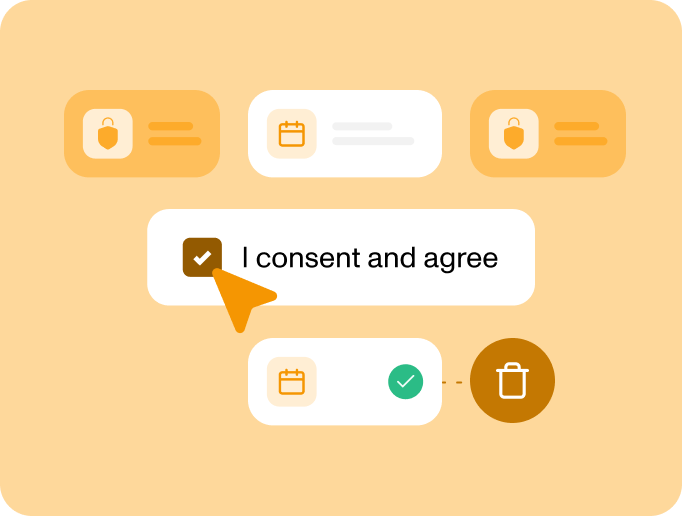
Collect the least amount of data you need for age assurance, ensure that it's only used for allowed purposes, and automatically delete data you no longer need.
Customize verifiable parental consent flows based on your product and regulatory needs, and seamlessly link children’s and parents’ accounts to facilitate ongoing consent and access management.
Present consent screens tailored to users’ context to help them make informed decisions and build trust.
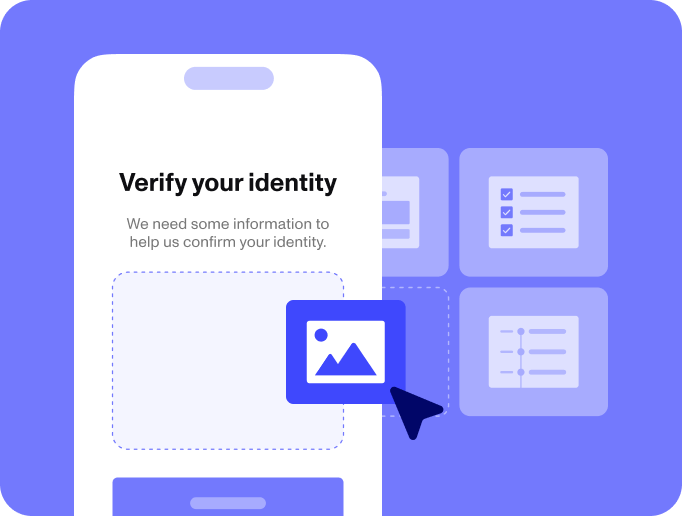
Balance conversion and assurance in real time with flows that adapt based on users’ location, age, risk, and more.
Tailor flow design and messaging to collect consent and guide users based on their geography, age, or other criteria.

Automate follow-up verifications, redaction policies, data routing between internal and external systems, and more.

Handle investigations and resolve user appeals by bringing disparate details into a unified view.

Store verified age and relevant insights, and map parent-child relationships to promote continued safety.
Automate follow-up verifications, redaction policies, data routing between internal and external systems, and more.
Handle investigations and resolve user appeals by bringing disparate details into a unified view.
Store verified age and relevant insights, and map parent-child relationships to promote continued safety.


Frequently asked questions
Toggle description visibility
What is the best way to verify age online?
Toggle description visibility
While there’s no single best way to verify age online, you can develop the right approach for your use case based on your regulatory requirements, industry, and user base.
In our experience, the most effective strategies combine multiple age assurance methods to balance user experience with compliance needs. Common methods include:
Government ID verification (analyzing a driver's license or passport)
Selfie age estimation (using AI to estimate age from facial features)
Database checks (validating information against authoritative sources)
NFC verification (reading cryptographic data from ID chips)
Many businesses take a dynamic approach that adapts based on location, risk signals, and age thresholds. For example, they may start with low-friction methods, like database checks, and step up to selfie age estimation or government ID verification only when needed.
How does age verification software work?
Toggle description visibility
Age verification software collects, analyzes, and validates user information to confirm the user meets minimum age requirements. Typically, the software will return a simple yes/no result.
When a user attempts to access age-restricted content or services, many age verification software tools take several steps to verify the user’s age. The exact configuration and process can depend on the organization’s preferences, but it might look like:
First, the system prompts the user to upload a picture of their government ID and take a selfie.
Next, advanced OCR technology extracts data from the ID (like date of birth). The software may run liveness checks to verify the selfie is real, and compare the image to the government ID’s image.
The software may cross-check personal information against authoritative databases to verify the information belongs to a real person and is accurate.
Finally, the software can send a yes/no response to the requesting organization before deleting the user’s personal information from its system.
Age verification platforms often use dynamic routing to automatically select the best verification method based on factors like user location, device capabilities, and regulatory requirements. Verifications typically complete in seconds, with results triggering automated workflows that grant or deny access, update user accounts, or flag edge cases for manual review.
Which industries require age verification?
Toggle description visibility
Age verification is required across a wide range of industries to comply with regulations and promote trust and safety. Legally required industries include:
Alcohol, tobacco, and cannabis sales (age thresholds are typically 18 or 21, depending on the jurisdiction)
Gambling and gaming sites (18 or 21+ by state)
Adult entertainment (18+)
Social media (emerging regulations require age assurance to protect minors)
Medical services, particularly telemedicine platforms, require age verification to ensure patients are at least 18 years old before providing informed consent for medical procedures
Beyond legal compliance, many businesses use age verification or age-checking software for trust and safety purposes. Below, we’ve provided a few common examples of how different industries confirm age requirements.
Fintech: Age verification supports KYC and AML compliance by confirming users meet minimum age requirements to open financial accounts, apply for loans, or access investment products. It helps fintechs fulfill Bank Secrecy Act requirements while maintaining a seamless onboarding experience and reducing fraud.
Digital health: Age verification ensures patients are at least 18 years old before providing informed consent for telemedicine consultations, procedures, or medications. It protects sensitive health information from unauthorized access, helping digital health platforms comply with HIPAA and other healthcare regulations.
Payments: Age verification in payments platforms supports fraud prevention, regulatory compliance, and risk-based decisioning. Payment platforms can assess transaction risk levels and implement additional verification steps for flagged individuals, while continuous monitoring ensures users remain compliant over time.
Cryptocurrency: Age verification is a foundational component of KYC and AML compliance for cryptocurrency exchanges and wallet providers. It helps crypto platforms meet global regulatory standards by confirming users are old enough to legally transact in digital assets (typically 18+).
Financial institutions: Age verification enables banks and credit unions to ensure customers meet minimum age requirements (typically 18+) for account opening, lending, and other financial services.
How can businesses ensure the privacy and security of user data during
age verification checks?
Toggle description visibility
Businesses can protect user privacy during age verification by practicing data minimization. That means collecting only the information necessary to confirm age, not full identity details.
Using a trusted third-party verification provider prevents your platform from directly handling sensitive personal information. Instead, you receive only a verification result (pass/fail or age bracket) while the provider manages data collection and security. All data should be encrypted using 256-bit AES encryption, with HTTPS for data in transit, and personal information should be automatically deleted or anonymized immediately after verification.

