
Research
Persona Research investigates the hard problems at the intersection of identity, fraud, and privacy. We develop and share new approaches that make online identity verification more accurate, fair, and safe for everyone.
Core research areas
Fraud intelligence
Analyzing, developing, and improving fraud detection and prevention methods globally by discovering new methodologies.
Data privacy
Furthering the goal of protecting users' data during identity verification, fraud prevention, and age assurance.
Online safety
Exploring how to create safer online environments, including cryptography and privacy-preserving age verification.
Accessible identity
Designing accessible and inclusive authentication and identity verification systems that expand access to digital services for all.
Publications
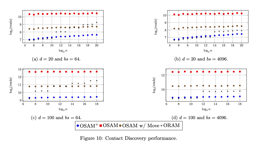
Oblivious Single Access Machines are Concretely Efficient
This work improves the concrete costs of OSAM-based oblivious algorithms. In short, the original work on OSAM proposed algorithms for manipulating objects with pointers to other objects, but their management of pointers involves non-trivial and concretely-expensive algorithms. Our work greatly simplifies and improves the efficiency of OSAM-based pointer handling by co-designing (1) pointer-friendly modifications to the underlying Path ORAM algorithm and (2) new algorithms for managing pointers and building graphs from pointers.
Aug 2026Sage Pia, Ananya Appan, Maryam Rezapour, Amey Shukla, Nikhil Date, Benjamin Fuller, Ling Ren, David Heath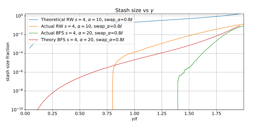
Updatable Oblivious Key Value Stores with Access Control and Application to Multi Key Searchable Encryption
We introduce an Updatable Oblivious Key-Value Store with access control (UOKVS), a dynamic extension of OKVS that supports insertions over time. We provide meaningful security in the presence of updates by equipping UOKVS with fine-grained access control. As a building block in UOKVS, we provide the first analysis of oblivious insertions for Cuckoo hashing, which may be of independent interest.
Aug 2026Benjamin Fuller, Ariel Hamlin, Arinjita Paul, Maryam Rezapour, Ronak Sahu, Amey Shukla, Mason StuartThe Fraud and Identity
Research newsletterA human-written newsletter that offers an intellectual and fun look at fraud trends and identity research findings.
Subscribe on
LinkedIn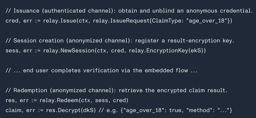
Double-Blind Verification: Unlinkable, Meterable Age Assurance with Server-Side Anonymous Credentials
We present Relay, a double-blind verification architecture that cryptographically isolates an authenticated issuance phase from an anonymized redemption phase, so a provider can meter and bill per event while remaining unable to correlate a redemption to the relying party that obtained the credential.
Jul 2026Brandon Huang, John Li, Tanya Smith, Justin Sayarath, Vincent Tsao, Ross Freiman-Mendel, Rick Song, Timothy Hwang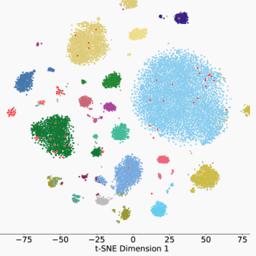
Layout-Aware Representation Learning for Open-Set ID Fraud Discovery
We develop a layout-aware representation learning framework for identity documents that maps each document into a discriminative 512-dimensional embedding space with strong inter-class separability and intra-class compactness. Built on DINOv3 and adapted to the document domain through supervised metric learning, the model achieves 99.83% accuracy on ID layout classification. The learned embedding similarity proves highly effective for detecting evolving real-world document fraud under adversarial and distribution-shifted settings.
Apr 2026Jinxing Li, Nicholas Ren, Cathy Chang, Hongkai Pan, Daniel George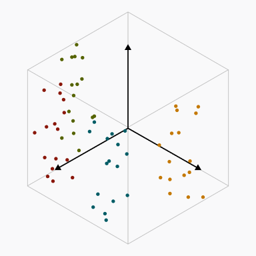
From Measurement to Mitigation: Quantifying and Reducing Identity Leakage in Image Representation Encoders with Linear Subspace Removal
We present a comprehensive study of identity leakage in visual embeddings and introduce Identity Sanitization Projection (ISP) as an effective mitigation. This work takes a step toward making powerful vision models more privacy-friendly, which is crucial for real-world deployment.
Apr 2026Daniel George, Charles Yeh, Daniel Lee, Yifei Zhang
Identity Muling and Techniques to Combat the Rise of Second-Party Fraud
As identity verification systems improve at detecting deepfakes and synthetic identities, fraudsters are increasingly turning to identity muling, a form of second-party fraud that relies on real people willingly sharing their identities or completing verification on behalf of bad actors. This white paper examines how identity muling works, why it is difficult to detect, how it differs from identity theft and other muling schemes, and which risk signals and defense strategies organizations can use to identify and disrupt identity mule operations.
Jan 2026Louis DeNicola
Threat Domain Partitioning and Sorted Rejection Labeling: Benchmarking for Adversarial Environments
Structural differences in fraud detection make conventional classification metrics both hard to compute and often misleading. We introduce a practical framework that defines business-aligned benchmarks that are cheaper to label, stable under performative drift, and foundational for systematic and iterative fraud model development.
Oct 2025Charles Yeh, Daniel Lee, Hongkai Pan
Modernizing Know Your Business (KYB) with online credibility signals
Traditional Know Your Business (KYB) checks confirm a company’s legal existence but often miss signs of real-world legitimacy or fraud. This white paper explores how integrating online credibility signals from a business’s website, social media presence, and customer reviews adds vital context to KYB. By combining registry data with digital footprint analysis, organizations can verify businesses more holistically, accelerate onboarding, meet regulatory standards, and reduce fraud risk.
Oct 2025Sam Breitbach
Understanding and Verifying Digital Identity
Digital identity connects who people are in the real world with how they interact online, combining personal data, behavioral patterns, and technological signals to establish authenticity. As digital ecosystems expand and AI-driven threats evolve, strong identity verification is essential to preserve trust, prevent fraud, and enable secure online engagement.
Jul 2025Shana Vu
Navigating Global Age Verification Laws in the Digital Era
As regulatory bodies worldwide strengthen age verification and data privacy regulations, organizations must balance compliance with seamless user experiences. Understanding emerging laws and implementing adaptable, privacy-conscious verification systems are key to protecting minors, maintaining trust, and meeting evolving global standards.
Oct 2024Kerwell Liao
Resources
Atlas: A Global Age Regulation Tracker
Persona Atlas is a free, collaborative database and API designed to help compliance teams navigate the complex landscape of age assurance and privacy laws.
Explore Atlas
Persona Research Grants
Persona has an open and ongoing call for research proposals that advance digital identity, privacy, fraud prevention, and online safety.
Learn more
A Digital Taxonomy of Fraud
Persona and researchers at the University at Buffalo created a taxonomy and dataset that aligns with the real-world fraud attacks we see every day.
Explore threat vectors