
Safe agentic commerce starts with KYA and dynamic IDV




Product, fraud, and trust and safety teams at online merchants and marketplaces have been fighting bots for a long time. While there were occasional disagreements about how “bad” bots were (a purchase is a purchase, some might say), the general consensus often ranged from suspicious to block them all. But not anymore.
As AI-powered browsers and agents become more commonplace, online merchants have to prepare for a world where agentic commerce is a standard sales channel. But agentic commerce won’t be devoid of fraud, which introduces a new layer of complexity for merchants.
You can’t simply ask whether an action is automated to determine if it’s risky. You need to know if it’s authorized.
Agentic commerce today
Web traffic from AI chat apps and browsers is up in every industry according to Adobe’s quarterly AI traffic report, with year-over-year increases at retail (693%) and travel (539%) sites leading the pack.
However, with a few exceptions, agents are assistive rather than autonomous. They might help you plan a trip or compare products, but they get stuck during verification or checkout.
Often, the hurdle to go from research to order confirmation is blocked because:
The merchant blocks all automated activity by default.
The agent can’t verify the user’s identity or authorize a payment.
The merchant doesn’t have a clear way to attribute the agent’s actions to a real user.
When a merchant struggles to distinguish user-approved agentic activity from an overreaching agent or outright abuse, the safest approach is to assume every agent lacks authorization. The few exceptions we see today are merchants creating partnerships with a specific AI company.
As a result, we’re broadly in the “crawl” stage of agentic commerce, where merchants focus on appearing in AI search results rather than enabling agentic commerce.
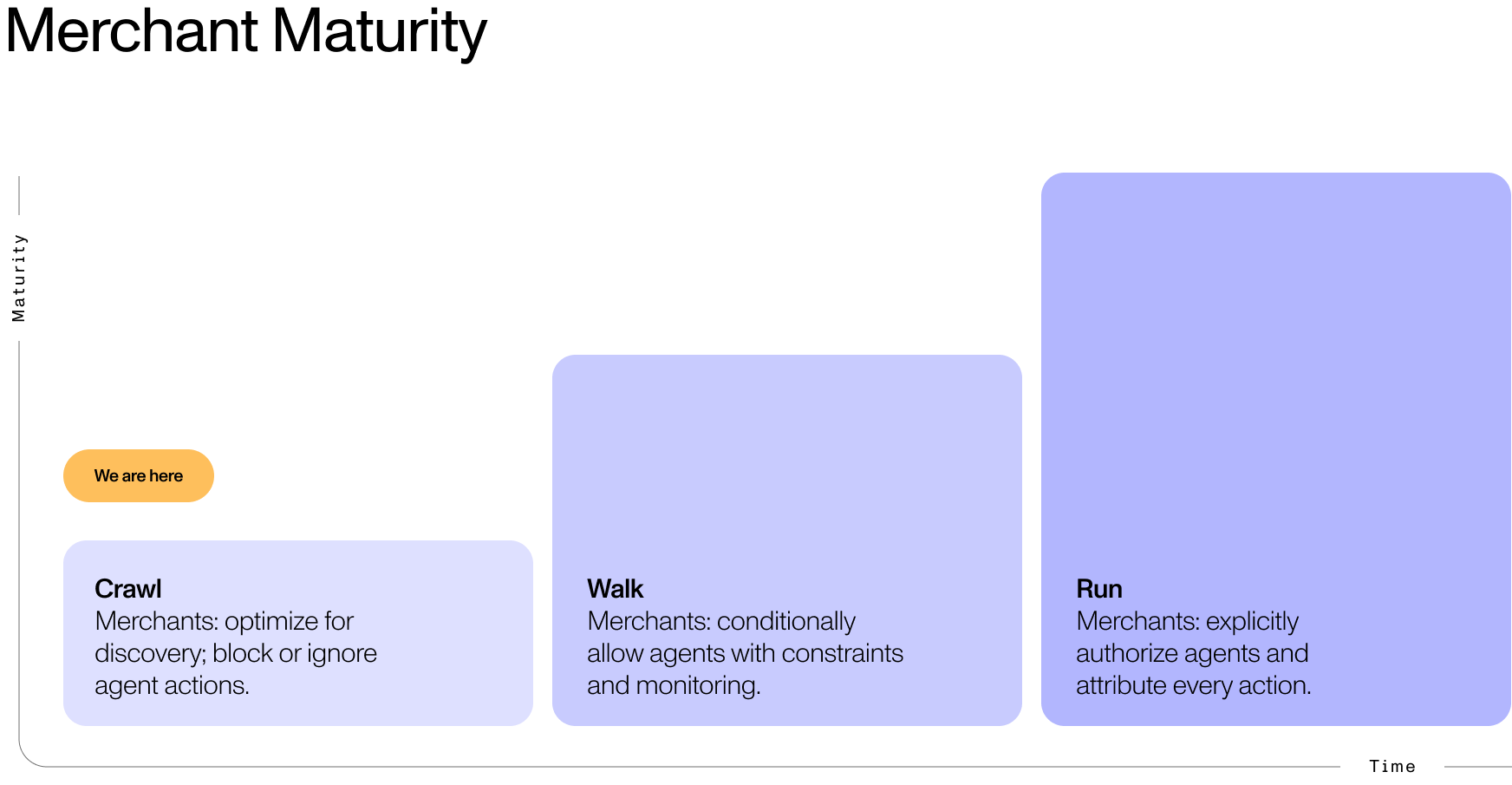
But merchants that don’t learn how to walk or run could find themselves left out of the race altogether.
Even if it’s small today, there’s a real opportunity cost to blocking legitimate, user-approved agentic purchase requests. Merchants that don’t want to get left behind will need to figure out how to safely work with a wide range of agents.
KYA is the key to unlocking safe agentic commerce
Merchants that want to participate in agentic commerce will need to be able to answer:
Who authorized the agent?
What did the person authorize the agent to do?
What conditions or restrictions has the user imposed?
What verified information did the user share with the agent?
Today, most businesses outsource their Know Your Customer (KYC) and Know Your Business (KYB) processes to specialized vendors. KYA can build on these time-tested approaches to bring a similar process to verifying an agent and the user behind it.
The core of every KYX process is identity verification, and that won’t change. With KYA, identity verification can bind an individual to their agents, allowing you to trace authorization and intent to the person. The verification doesn’t answer every outstanding question, such as who is accountable if an agent misinterprets the user’s desires when making a purchase. But it’s a big and important step for moving forward.
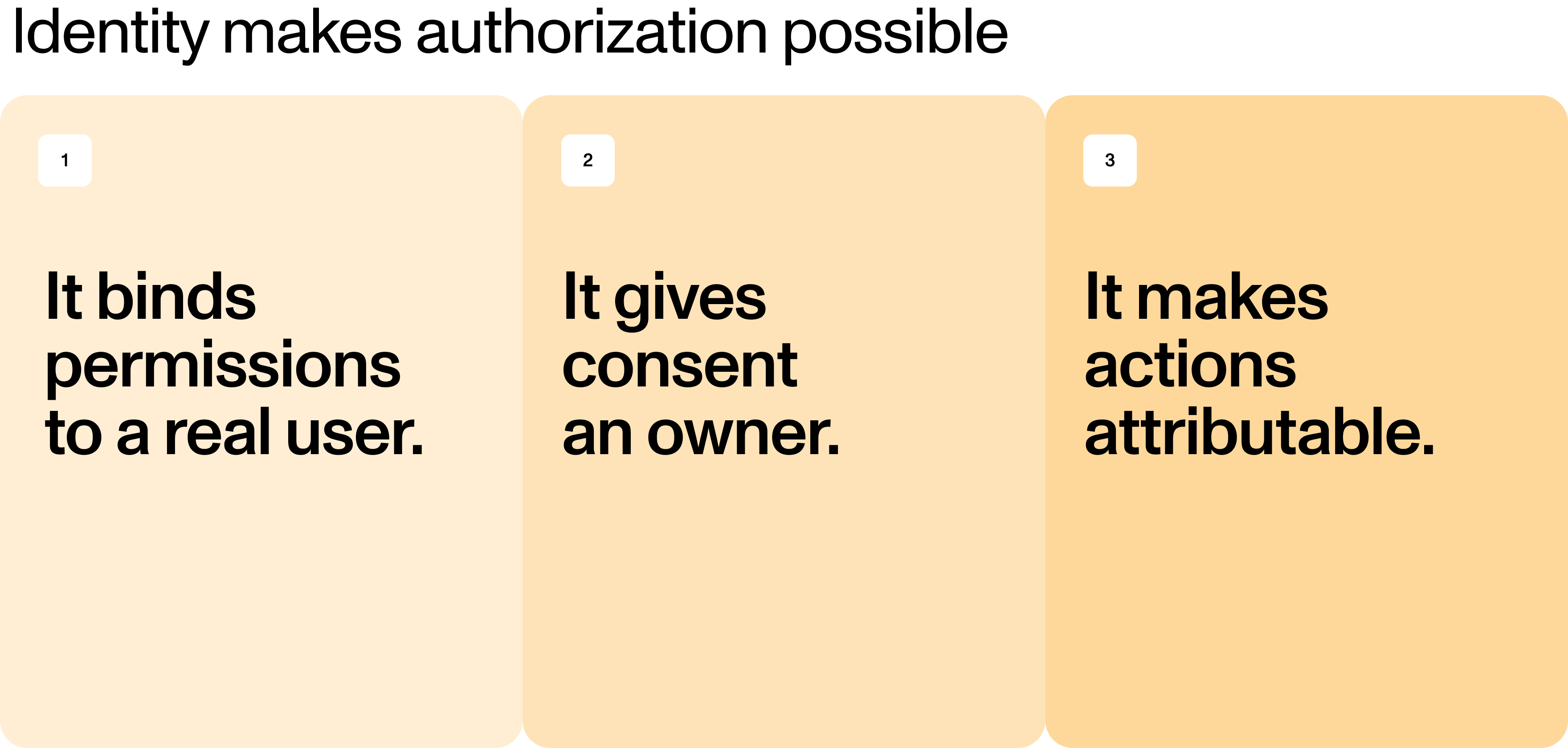
During KYC, identity verification can take different forms, including verifying someone’s identity using their personal information and a database check, their government ID, or a selfie. The preferred method can depend on the context, regulatory requirements, and business goals. Automated identity verification solutions can also turn what is sometimes a complex manual task into a simple process for end users.
We will likely see a similar situation play out with identity verification in KYA.
How KYA-enabled commerce could work
Let’s take a leap into the future to imagine what safe agentic commerce could look like soon. Here are two examples of user flows that offer a good user experience and security for merchants.
Pre-authorization frees users from monitoring agents
Say someone gets home from work, drops their bags on the ground, and asks an AI agent to order their favorite Mediterranean dinner and bottle of wine.
They’ve previously given the agent permission to use saved payment, verified age, and account history data. Now, they simply tell the agent they’re willing to spend up to $75 tonight and authorize the order.
To proceed, the agent connects to several delivery apps, analyzes the user’s previous orders, searches for coupon codes or other discounts, and selects the best option within the pre-authorized price range.
On the merchant side, the delivery apps can confirm that the agent was recently authorized by a verified user and that the user is old enough to order wine. The delivery app that connects the user with the best-fitting restaurant and keeps the total fee within the allowed limit wins the person’s business.
Merchants can step up risky agent requests
In another scenario, a user wants to buy World Cup tickets and asks an agent to compare schedules, preferences, and prices. The agent finds the perfect game and tickets, and the user confirms the agent’s access to their ticket-buying platform account.
The agent could check out on its own for some events, but not the World Cup. The merchant decides to request additional identity verification because the tickets are particularly expensive and in high demand.
Step-up verifications can take different forms, and in this case, the merchant requests a selfie verification because it’s most interested in liveness detection results. The user’s agent passes on the request and prompts the user to take a selfie using the merchant’s KYA system.
When the user takes a selfie, the KYA system collects various risk signals to verify the user’s liveness and confirm the user isn’t connected to other suspicious accounts. Satisfied with the results, the merchant allows the agent to proceed with the purchase.
Four things that good KYA solutions have in common
In the examples above, the user, agent, and merchant experience is fairly streamlined because there are systems to verify identity and authorization. They create a chain of trust throughout the transaction, allowing the user to feel confident that the agent will act within a limited scope and the merchant to feel confident that a verified user authorized the agent to make a purchase.
But these systems won’t be created equally. Similar to the KYC landscape today, we may see a variety of KYA solutions with varying levels of verification methods, features, and customization. We believe that good KYA solutions will share these four capabilities:
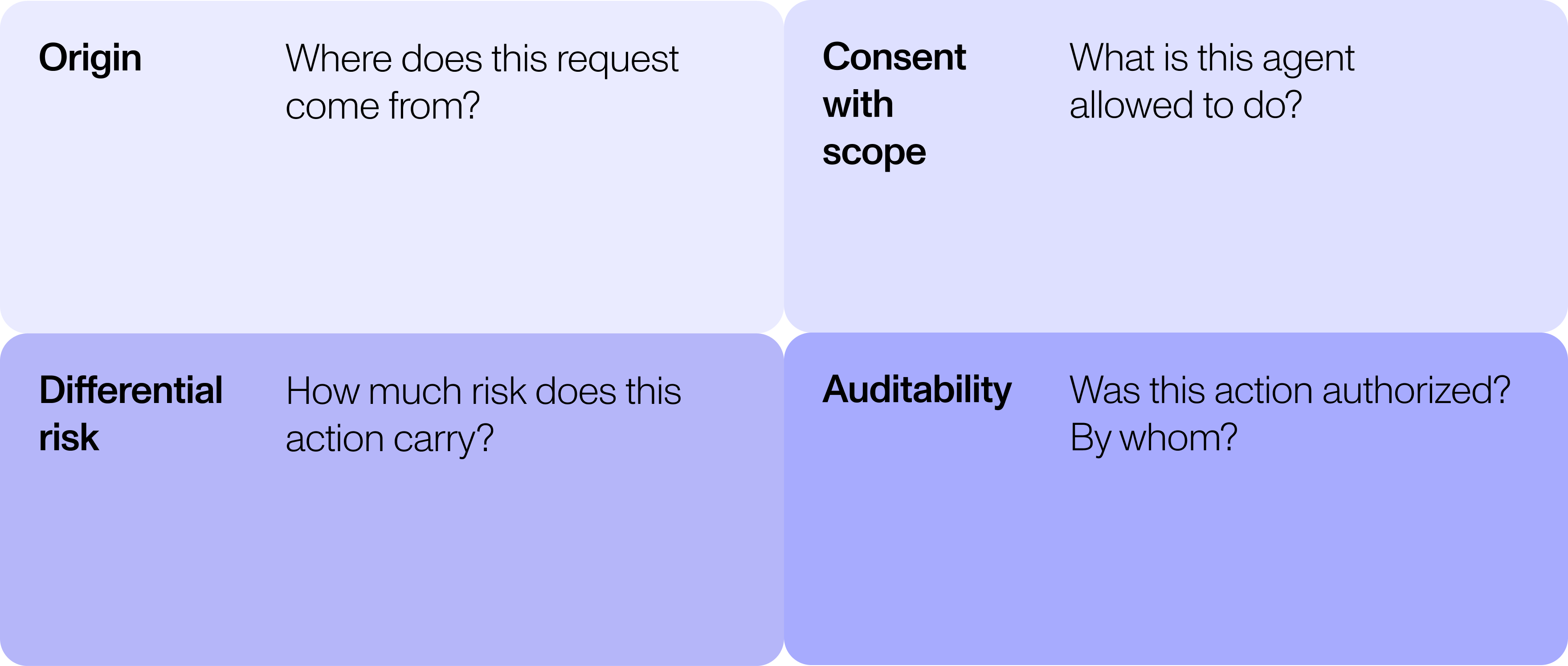
1. Origin
First, a good KYA solution will help establish the origin of a request and allow merchants to reliably:
Apply limits
Respond to incidents
Revoke access
Remember previous approvals
2. Consent with scope
Second, the solution should help merchants act with confidence, knowing that the specific agent is bound to a real user for a specific set of actions.
For users, this is the difference between authorizing an agent to act on their behalf in general and authorizing the agent to do a certain thing under certain conditions.
3. Differential risk
Third, the solution should help merchants define different risk levels and respond accordingly.
For example, a merchant might want to fully accept verified claims attached to an agent during low-risk scenarios. But it should also be able to require step-up verification checks if the risk level changes and during higher-risk scenarios.
4. Auditability
Finally, the solution should provide merchants with interpretable records where appropriate.
Users own their data and should be able to govern its use, and solution providers should use a privacy-first approach to creating audit trails with records of what the agent requested, what the user approved, and what actually happened.
Persona is building identity infrastructure for the AI age
Understandably, consumers may be ready to dive into agentic commerce faster than some merchants. After all, merchants could be carrying most of the risk for unauthorized purchases, whether that’s from a bad actor controlling malicious agents or a user who is surprised by what their agent buys.
Merchants that want to experiment with agentic commerce should consider the scope of their tests. For example, consider the amount and types of assurance you’ll need from an agent to feel confident with authorizing a transaction, and how you’ll require additional verification from humans when needed.
Persona’s verified identity platform helps leading organizations like Etsy, GetYourGuide, TaskRabbit, and OpenAI achieve their goals. Contact us if you want to discuss how identity verification and KYA can help you reach yours.
The information provided is not intended to constitute legal advice; all information provided is for general informational purposes only and may not constitute the most up-to-date information. Any links to other third-party websites are only for the convenience of the reader.